Capabilities
What each capability covers.
Most engagements combine two or three.
AI strategy
AI strategy as system architecture.
Opportunity identification
We map opportunities across workflows, products and operations, and distinguish demonstrations from deployable systems.
Agent design and orchestration
Tool-using agents, multi-agent architectures, and a separation of planning from execution.
Retrieval as a system
Pipelines built with evaluation, freshness policies, observability and source-grounded generation.
Model integration and fine-tuning
When to fine-tune, when to rely on prompt design, when to add a router, and when to host inference in-house.
Included in every AI engagement
The engineering that makes AI safe to run.
Human-in-the-loop by design
We define what a person decides and what the system proposes.
Responsible AI governance
Audit trails recording actor, timestamp and policy context, with quality gates for each tool.
Failure-mode design
Defined behavior for tool timeouts, invented function names and invalid responses.
Architecture and delivery
The five practice areas.
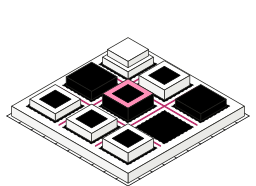
Strategy and architecture
Translates business context into technology direction, so that each later decision is simpler and less costly.
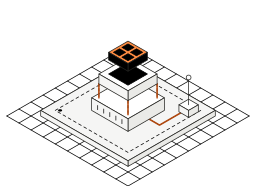
Application engineering
Full-stack delivery from prototype to production, across web, mobile, APIs and the underlying DevOps.
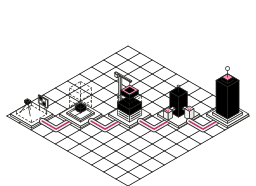
Cloud and data platforms
Multi-cloud expertise and lakehouse data engineering, with migration and FinOps as dedicated engagements.
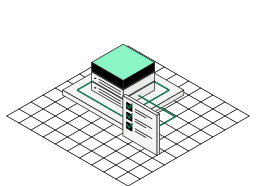
Enterprise platforms
Salesforce and Microsoft Dynamics delivery and rationalization, with one team accountable for both.
Modernization and execution
Maps the current state to the future state, with embedded delivery so the strategy holds.
Discuss the decision in front of you.
Tell us which capability matters most right now, and a senior practitioner will respond.